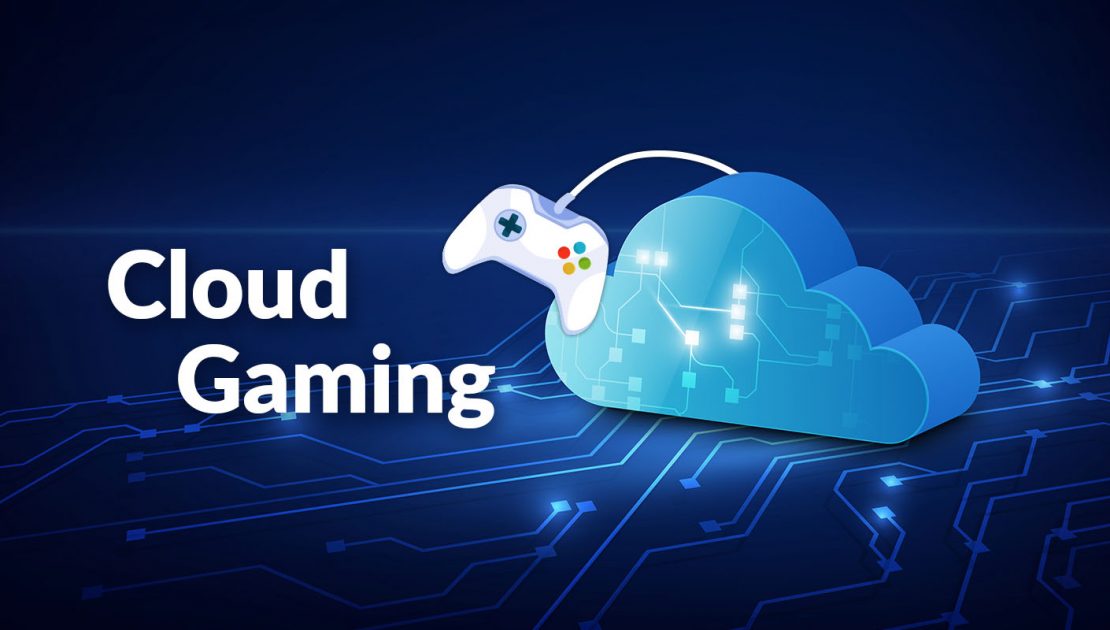
Cloud gaming is rapidly becoming mainstream in 2025. Instead of buying an expensive console or gaming PC, all the heavy graphics and processing happen on remote servers, and your device simply streams the video (think Netflix for games). In other words, the “game machine” lives in the cloud. By 2025 this vision is reality – firms like Loud play boast cloud PCs with 32GB of RAM and high-end NVIDIA GPUs that deliver 60+ FPS on ultra settings. Players just need a device (phone, tablet, smart TV or old computer) and a good internet connection. In short, any screen can become a gaming console – you stream the gameplay from powerful servers instead of downloading or running it locally.
Explosive Growth in Cloud Gaming 2025
Multiple market reports confirm that cloud gaming is skyrocketing. Fortune Business Insights, for example, values the global cloud gaming market at about $9.7 billion in 2024, jumping to ~$15.7 billion by 2025, and projecting it to $121.8 billion by 2032 (roughly 34% CAGR). Even more conservative analyses forecast around $2.78 billion by 2033. What’s driving this surge? Simply put, gamers want high-end titles without high-end hardware. Cloud gaming makes “console-quality” games playable on basic devices. One report notes that leading services like Microsoft’s xCloud and NVIDIA GeForce NOW let users “stream console-quality games on mobile devices with minimal latency,” which massively expands the audience.
Major tech companies are all-in. Top players in the space include Microsoft (xCloud/Game Pass), NVIDIA (GeForce NOW), Google (Stadia, now closed), Amazon (Luna & GameLift), Sony (PlayStation Now/PS+), and even companies like Intel and various Chinese firms. Partnerships between game studios, telecoms, and cloud providers are forming to take advantage of 5G’s low-latency networks and powerful data centers. For example, AWS offers GameLift to stream games at 1080p/60fps over the web using its global GPU servers, and Microsoft uses Azure’s cloud for Xbox streaming. As a result, regions with strong broadband and 5G infrastructure (North America, Asia Pacific) are expected to lead growth.
Importantly, casual gamers are predicted to drive most of this growth. Broad internet access and cheap cloud subscriptions mean even hobbyists and families can join in. One survey found about 2.4 billion mobile gamers worldwide, many of whom are prime users for cloud streaming. In fact, industry experts explicitly identify casual gamers as the leading segment in cloud gaming. That’s great news for families and budget gamers – more titles will be accessible on phones, tablets or TVs without new hardware.
Key Cloud Gaming Trends in 2025
Several major trends are shaping cloud gaming this year:
- 5G and Edge Computing: Ultra-fast, low-latency networks are a game-changer. With 5G rollouts and edge servers close to users, round-trip delay is shrinking. Analysts note that 5G’s low-latency capability is a key market driver. Mobile carriers and cloud providers are teaming up (using 5G towers and MEC servers) to further cut lag for competitive gaming.
- High Accessibility: Cloud gaming removes hardware barriers. By 2025, players can pause on a console and continue the same game on a phone or laptop seamlessly. Services promise instant play, often with no downloads needed. This cross-device continuity is now expected – you can start on a PC and switch to a phone without losing progress, making gaming truly platform-agnostic.
- Immersive Tech (AI/VR/AR): Artificial intelligence and extended reality are becoming integrated. Game developers use AI for smarter NPCs and adaptive difficulty, even during live streams. Meanwhile, VR/AR are moving from experiments to mainstream. Comfortable, affordable headsets (like Meta Quest 2/3) now support Xbox Cloud Gaming apps, letting players stream “in VR”. Augmented reality games and cloud graphics also combine to let players game anywhere (imagine Pokémon Go-level AR in fully 3D games).
- Subscription Models and Demos: Games as a service models are growing. Instead of buying games one-by-one, players increasingly subscribe to game bundles. Xbox Game Pass Ultimate, NVIDIA GeForce Now memberships, Amazon’s Luna+ and even PlayStation’s subscription tiers all offer large libraries in one fee. Free trials and “cloud demos” are also returning, where you can sample games via the cloud before purchasing. This lowers the risk for gamers and helps new services attract users.
- Global Expansion: Cloud gaming is expanding beyond traditional markets. Asia-Pacific (China, India, Korea) is expected to dominate due to massive smartphone penetration and investment. Even in developing regions, cheaper internet and mobile-first gaming means more cloud gamers. Localization of services for different languages and networks is picking up.
The combination of these trends means richer game experiences for everyone – from ultra-realistic next-gen titles for hardcore fans to simple casual games for new players. Cloud gaming 2025 is about choice: people can pick games or devices, not worry about hardware.
Cloud Gaming Infrastructure & Hosting
Behind every streamed game is heavy infrastructure – and this is where cloud hosting and servers come in. Today’s cloud gaming runs on powerful data centers stocked with GPUs and high-speed networks. For example, the cloud provider Loudplay advertises servers with 512 GB of RAM and NVIDIA A4000 GPUs (16 GB VRAM), enabling ultra settings gaming streamed to any PC. Every frame is encoded on these servers and pushed to you. In fact, Loudplay explains: “our servers host your personal Cloud PC,” so you never need to buy new hardware.
Major cloud providers are fully in this race. Amazon Web Services, Microsoft Azure, Google Cloud and others offer specialized gaming services. AWS GameLift Streams can deploy your game on its global GPU instances and stream it at 1080p/60fps to any browser. Azure has PlayFab and xCloud backend, and Google (before Stadia closed) was pushing Stadia’s streaming tech. Even telecoms use their cloud infrastructure (edge servers at cell towers) to shorten the path.
For gamers, this means we rely on high-performance server and network hosting, exactly the kinds of services offered by cloud hosting and VPS providers. Private game servers (for Minecraft, Rust, etc.) are often run on VPS or dedicated hosting, and cloud gaming services spin up dozens of GPU instances to scale for demand. If you’re curious about the tech: think of cloud gaming as gaming’s version of web hosting – where we stream pixels instead of HTML. As internet infrastructure improves, cloud gaming quality rises.
(For those technically inclined, some gamers even rent an RDP/VPS with a powerful GPU and install their own games on it, effectively making a personal cloud gaming machine. While not mainstream, it shows how closely cloud gaming ties to hosting and remote desktop technology.)
What Gamers Must Know in 2025
Cloud gaming brings big advantages but also some caveats. Here are key things every player (casual or hardcore) should know:
- Internet & Latency: A fast, stable connection is a must. Cloud gaming needs low-ping networks with plenty of bandwidth. Most services recommend wired fiber or strong 5G/wifi. If your ping is too high or bandwidth too low, gameplay will lag or video quality will drop. In practice, a steady 20–30 Mbps (or more) is recommended for smooth 1080p gaming. In short: test your network and optimize (use Ethernet or 5G where possible).
- Device Flexibility: You can use any screen. Smartphones, tablets, laptops, TVs and even cars (some new models can stream games) can be gaming devices. Many players discover they can play on hardware they already own. One big benefit for families and low-budget gamers is that an old PC or TV-box can handle heavy games via cloud. Just remember: mobile data plans often have limits, so favor Wi-Fi or unlimited plans.
- Subscriptions vs. Ownership: Cloud services typically work on a rental/subscription basis. Unlike traditional games, you may not “own” a game in your account permanently. Instead, you buy access (for example, Nvidia GeForce Now has free and paid tiers, Xbox Game Pass Ultimate is ~$16/month for all-you-can-play, etc.). However, many services let you play games you already own on other platforms. Check each service’s model: some have monthly fees with large libraries, others let you stream your existing Steam/Epic games for a fee.
- Game Libraries: Not every game is available on every cloud platform. Major AAA titles are often on GeForce NOW and Game Pass, whereas indie or region-specific games may appear on smaller services. Always check the library. Note also that some exclusives (like many Sony or Nintendo titles) aren’t available via PC/phone streaming (though Sony’s PlayStation Now provides many PS games). That said, libraries are expanding rapidly – many older titles and new releases are being added yearly.
- Graphics Settings: Streaming limits are improving, but you may notice compression artifacts on fast camera pans or small text. It’s not identical to local play. The more bandwidth you have, the higher the streaming resolution and frame rate. Services often allow up to 4K/120fps on high-end plans, but 1080p/60fps is common baseline. Visual purists should try different settings to find a sweet spot for quality vs. lag.
- Resilience & Offline Play: Remember that you need the internet to play on the cloud. If your network drops, so does the game. Many cloud titles also lock to the service (you can’t play offline as you would with a downloaded game). For family use, consider saving games to cloud or local backups where possible. Also note that cloud gaming consumes data – playing an hour may use 3–15 GB depending on quality.
- Cost & Budget: Cloud gaming can save money on hardware, but it isn’t always cheaper than buying a console if you play a lot. Evaluate how often you play. Casual families may find subscription plans (often starting around $10–$20/month) very cost-effective for occasional play. Hardcore gamers might use free tiers of services (Nvidia GeForce NOW offers a limited free tier with 1-hour sessions) or split subscriptions. Over time, the expense of ultra-fast internet is offset by not buying new consoles every few years.
- Try Before You Commit: Many cloud platforms have free trials or low-cost demos. For example, some Xbox Cloud games let you try 30 minutes at no charge. Nvidia GeForce NOW has a free membership tier (session limits). Use these offers to test performance on your network before buying a plan.
Conclusion
In 2025, cloud gaming is no longer just hype – it’s a mainstream way to play. All types of gamers benefit: families get multi-device convenience, casual players get instant access, and even hardcore gamers can compete without the latest hardware. As one report notes, this trend “offers unparalleled convenience and accessibility”. Of course, good internet and the right service matter. But as networks improve and libraries grow, expect cloud gaming to keep growing fast.
For anyone curious (or ready to dive in), now is the time to explore the cloud gaming world. With competition fierce among providers, deals and features are plentiful. And from a hosting perspective, this boom means more demand for robust servers, edge networks, and VPS solutions – so even our domain/cloud hosting business benefits indirectly from the surge in demand. Key takeaways: Cloud Gaming 2025 is about instant play on any device. Market forecasts are massive (30+% growth). Casual gamers will lead this wave. Major trends (5G, AI, VR) and improvements in cloud infrastructure (AWS/Azure/GameLift) are fueling it. Gamers should ensure fast internet and consider subscription plans for best value. In summary, cloud gaming is reshaping how we play – from living rooms to bedrooms to on-the-go – and it’s powered by the same cloud hosting and server technologies our industry specializes in.
Also Read: What is an SSL Certificate Does and Why You Need One